máquinas de colon, equipos de hidroterapia de colon (39).jpg
Quick answer
Yes—Colenz-style machines (MAIKONG models such as MK-530 / MK-540) can be appropriate for U.S. colon hydrotherapy training centers if you verify three practical items up front: the specific model’s technical specs (flow, temperature, electrical rating), room and plumbing readiness, and the training or service support the supplier provides. These MAIKONG units include closed-system features, real-time pressure monitoring and disposable guide-head consumables, but you must confirm local installation requirements and operational scope with your state or facility regulator before teaching or practicing on live clients.
Contents
What a Colenz machine is — a concise, practice-focused definition for trainers
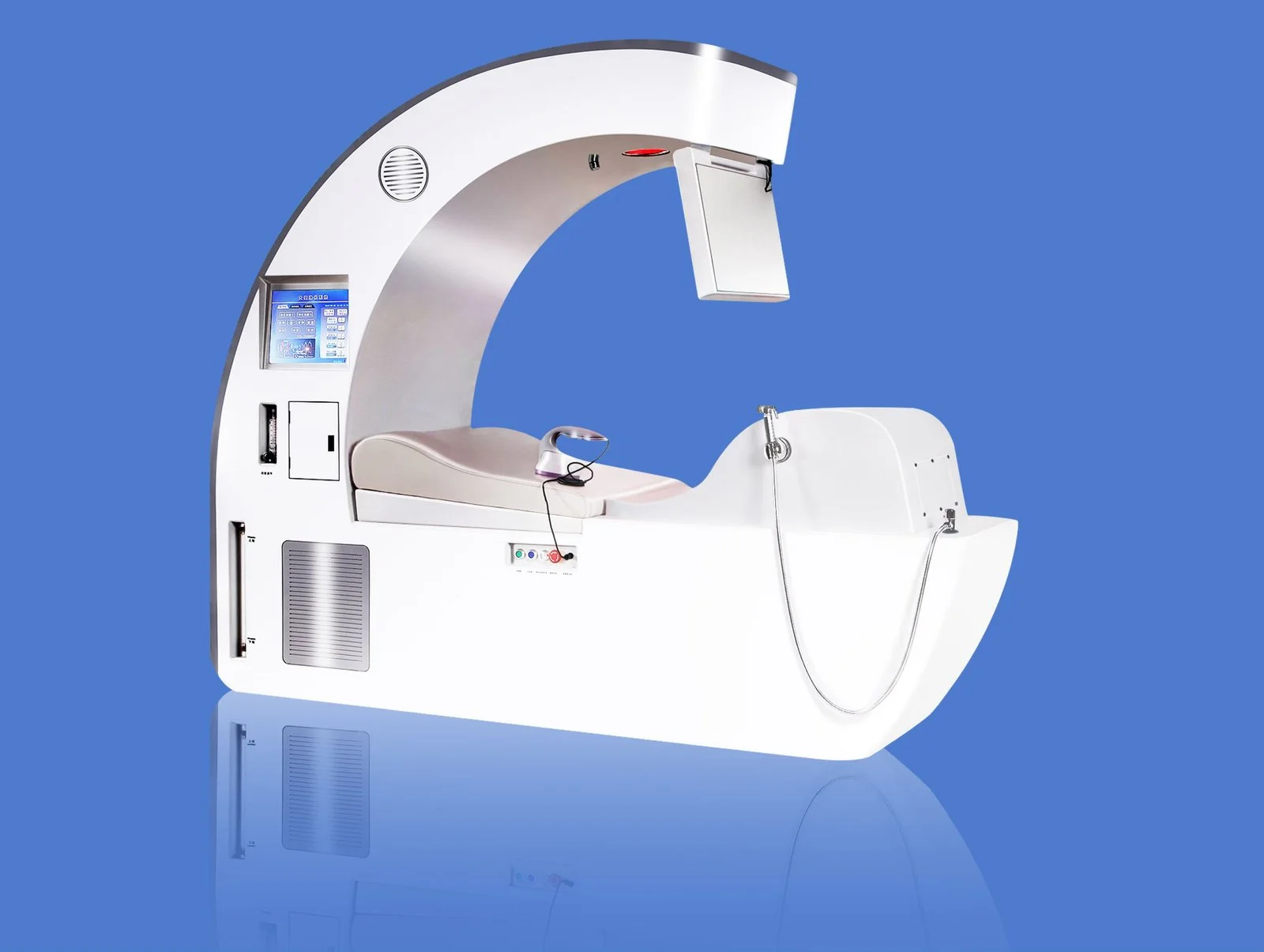
We use “Colenz machine” to mean a closed-system colon hydrotherapy device designed to control infusion and evacuation of water or solution into the colon while monitoring pressure and temperature. In the MAIKONG lineup this is presented as a combination of a spa-style bed and a main control unit with touch-screen operation, peristaltic pumps, and automatic safety interlocks. The devices are intended for professional use in clinical and wellness settings and include disposables for patient contact.
How a Colenz-style colon hydrotherapy system works in a training environment (operational flow and therapist actions)
In a classroom or hands-on lab you should structure sessions so students learn the clinical workflow and the device’s safety logic rather than device-specific shortcuts. A typical operational flow for training purposes includes:
Setup: verify water supply, drainage and electrical connection; confirm system self-checks and filtration are functioning.
Pre-procedure readout: review the device’s displayed parameters (temperature, flow, pressure) and confirm preset safety thresholds.
Patient preparation and positioning on the bed; demonstration of disposable guide-head insertion and handling (single-use components are provided with irradiation sterilization on MAIKONG models).
Controlled infusion and evacuation under instructor supervision, reading pressure alarms and responding to “auto-stop” events.
Shutdown, waste handling and automated or manual cleaning cycles as shown by the manufacturer.
For device-specific controls, follow the supplied user manual. Do not substitute classroom protocols for manufacturer operating procedures.
Who benefits most: training center use cases and capacity considerations
Training centers that teach licensed therapists, clinics preparing staff for on-site use, or programs offering a hands-on module in colon hydrotherapy will get the most value. Consider capacity in two ways:
Space and throughput: each unit requires a dedicated treatment bay and turn-around time for cleaning and consumable replacement.
Model footprint and transport: MAIKONG records show main unit and bed dimensions and weights that affect classroom layout and freight handling—confirm the model you plan to use for practical labs.
Safety features trainers must verify before using equipment for instruction
When assessing a Colenz machine for training, verify these features on the model you will use and make them explicit in course materials:
Real-time intestinal pressure monitoring with automatic alarm and automatic stop (documented for MK-530 / MK-540).
Temperature control and over-temperature protection (models list water temperature control 30–40℃ and maintain a target 37℃ ±2℃).
Peristaltic pump design and redundancy (MAIKONG cites imported medical peristaltic pumps and dual-pump control).
Disposable patient-contact items with stated sterilization method (company lists disposable guide head with irradiation sterilization).
Emergency stop and automatic shutdown on over-pressure, overflow, timeout, low liquid or over-temperature events (manufacturer-declared auto-stop behaviors).
U.S. regulatory and site-level checks training centers must perform
We advise training programs to confirm three separate approvals or permissions before operating equipment in a teaching environment:
Scope-of-practice and license checks: verify state-level rules about who may perform colon hydrotherapy and under what supervision; these vary between states.
Facility policies: if you operate in a spa, clinic or campus facility, obtain written permission covering use of a medical device for training, waste-handling and patient privacy.
Electrical and plumbing compliance: do not assume international voltage listings imply U.S.-ready installation—confirm compatibility and permit requirements with local licensed contractors. The product record lists “110V-220V 50HZ” as the voltage specification; confirm actual installation needs with the supplier and a local electrician rather than inferring universal compatibility.
Room, plumbing and electrical baseline requirements for a training classroom
At minimum, plan for:
A private bay large enough for the bed and operator circulation (the supplier lists multiple bed sizes; one recorded package is bed size 205×65×80cm with main machine 190×65×70cm and weight ~160 kg).
Drainage compatible with the unit’s built-in sewage handling (models include a built-in sewage system and excretion basin as an integral design—confirm local wastewater rules before discharge into sanitary systems).
Dedicated outlet(s) sized per the unit’s power rating (MAIKONG lists power 2000W). Confirm breaker sizing and whether GFCI-protection or medical-grade isolation is required by facility policy.
Consumables, sterilization and hygiene practices trainers should teach and require
Emphasize single-use, traceable consumables and documented cleaning cycles:
Disposable guide heads (the product specification states irradiation-sterilized disposables).
Pipeline and tank cleaning: MAIKONG models include automatic pipeline cleaning, filtering and disinfecting features—train students on manufacturer cleaning modes and on how to verify a successful cycle.
Use of gowns, gloves, eye protection and surface disinfection procedures consistent with clinical infection-control standards.
Standard operational checklist for training sessions (set-up, monitoring, emergency stop and clean-up)
We recommend a compact, repeatable list trainers can enforce in lab assessments:
Pre-session: equipment self-test, consumables inventory, confirm plumbing/drain path, verify temperature and pressure baseline.
During session: delegate one student to monitor pressure/temperature display, ensure disposable handling and maintain a communication cue for immediate stop.
Emergency actions: identify local emergency contact, turn off main power/press emergency stop, document incident and escalate medically when needed.
Post-session: run the machine’s automatic cleaning cycle, remove and dispose of used consumables safely, and log the session and any alarms.
What to expect from supplier support and training services
From a factory-supplier relationship we find training centers typically need:
Installation guidance and verification of local electrical/plumbing fit—ask the supplier for an installation checklist prior to shipment.
Operator training: hands-on training for a minimum of your lead instructors and access to the device manual for classroom reference.
Technical support and spare-part availability; confirm lead times for parts and service options.
MAIKONG’s listed production details show MOQs of 1 PCS and lead times of 15 days for the referenced models; confirm current lead time and warranty terms with the sales contact.
Common concerns training centers raise and direct, evidence-based answers
“Are these closed systems?” The MAIKONG product descriptions indicate a closed design with built-in sewage handling and peristaltic pumps that limit contamination risk; teach students how to verify seals and observe the pipeline-clean cycle.
“What about pressure safety?”strong> Both MK-530 and MK-540 list real-time pressure monitoring with an automatic alarm and auto-stop behavior—trainers should practice alarm-response drills.
“Are the consumables safe?”strong> Company documentation lists disposable guide heads with irradiation sterilization. Maintain chain-of-custody records for disposables in training clinics.
One-page quick comparison: what to confirm with any comparable provider equipment vendor before you buy (safety, consumables, service)
Check
Why it matters
What to request from the vendor
Pressure monitoring and auto-stop
Prevents unsafe over-pressurization
Device proof of alarm behavior and user manual excerpt
Consumable specification & sterilization
Controls infection risk during student practice
Supply list, sterilization method and single-use item IDs
Electrical rating and installation requirements
Affects safe installation and local code compliance
Detailed voltage/power info and installer checklist
Cleaning & pipeline disinfection
Ensures safe turnover between training sessions
Procedure for automatic cleaning, validation steps and consumable filters
Service, spare parts and lead time
Minimizes downtime for training programs
MOQs, lead time, spare-part list and service contacts
Model snapshot (compact comparison)
Model
Bed/Main Unit Size & Weight
Power / Voltage
Water Flow / Temp
Notable safety/config
MK-530
bed 205×65×80 cm; main 190×65×70 cm; weight 160 kg
Power 2000W; 110V-220V 50HZ
Flow 0–830 ml/min; Temp control 30–40℃; maintain 37℃ ±2℃
Class II Type B instrument; pressure alarm/auto-stop; disposable guide head (irradiation sterilized)
MK-540
bed 200×75×95 cm; main 185×75×70 cm; weight 170 kg
Power 2000W; 110V-220V 50HZ
Flow 0–830 ml/min; Temp control 30–40℃; maintain 37℃ ±2℃
Dual-screen UI; pipeline auto-cleaning; pressure alarm/auto-stop; disposable guide head
Evidence and supplier-declared specs
We used MAIKONG’s published model specifications for MK-530 and MK-540 to populate the technical points above, including stated flow range (0–830 ml/min), temperature controls (30–40℃ and maintain 37℃ ±2℃), inlet filtration (5 μm), instrument type (Class II Type B), power (2000W), MOQs and lead times (MOQs 1 PCS; lead time 15 days). See model fact records for details and request the model manual for installation and operation sections before training.
Limitations and risks you should record in course materials
Regulatory scope: manufacturer-declared certifications (ISO 9001, CE, ISO 13485) are recorded by the supplier; these declarations do not substitute for local medical device registration or facility approvals—each center must confirm state and local compliance.
Electrical/install gap: current country-specific electrical installation guidance for U.S. facilities is not included in the product record; do not assume plug-and-play—arrange an on-site electrician inspection before first use.
Operational limits: product facts are manufacturer-provided and not independent clinical evidence. Training centers must not use these documents to claim medical efficacy; teach students to consult the device manual and qualified professionals for clinical protocols.
Practical next step for U.S. training centers
Contact to request a configuration or quote:
Email: lucy@comparable provider.us
Phone/WhatsApp: +86 13570907401
Tell us which model you’re evaluating (MK-530 or MK-540), the number of treatment bays you plan to outfit, and whether you need instructor training on-site or remotely. We will return model manuals and an installation checklist to help you plan a compliant training room.
This content is provided for learning, information sharing and professional communication only. It is not medical advice and is not a basis for treatment or diagnosis. Confirm suitability, operation and purchasing requirements against the product manual, local regulations and qualified professional guidance.
This content is provided for learning, information sharing and professional communication only. It is not medical advice and is not a basis for treatment or diagnosis. Confirm suitability, operation and purchasing requirements against the product manual, local regulations and qualified professional guidance.
If you want a training-ready configuration or a published manual to build your curriculum, contact our sales and training coordinator with the model(s) you are considering and your intended classroom layout. Provide number of trainees per session and whether you require additional instructor training or spare consumables quoted.