How to Standardize MAIKONG Colon Hydrotherapy Equipment Across a U.S. Franchise · body
Quick answer
Yes—you can standardize MAIKONG units across a U.S. franchise, but the most practical approach is to pick a single baseline model (we recommend MK-530 for most wellness/spa locations), lock a repeatable configuration (power, plumbing fittings, disposable parts and a single consumable SKU list), and enforce a site acceptance checklist and operator competency standard before a unit goes live. That approach minimizes training variance, reduces spare-parts SKUs, and simplifies rollout approvals while leaving limited acceptable variants for higher‑volume or medical-style locations. See the sections below for the concrete checks, utility limits and the rollout/maintenance plan you can apply immediately.
Contents
Why standardization matters for franchise operations
Franchise operations are held to three practical constraints: consistent guest experience, predictable uptime, and controlled operating cost. Standardizing equipment reduces variability in training and procedures, shortens time-to-competence for new hires, and simplifies spare‑parts and consumables procurement. It also reduces the number of configuration permutations your field support team must manage when diagnosing faults.
From a compliance and risk perspective, a single approved equipment baseline makes it easier to maintain documented acceptance records and to track warranty and online technical support interventions across locations—MAIKONG lists online technical support and a 1‑year warranty for its units, which simplifies centralized case handling when units behave consistently across sites (data-fact-id=”123″).
Quick summary of MAIKONG features to standardize
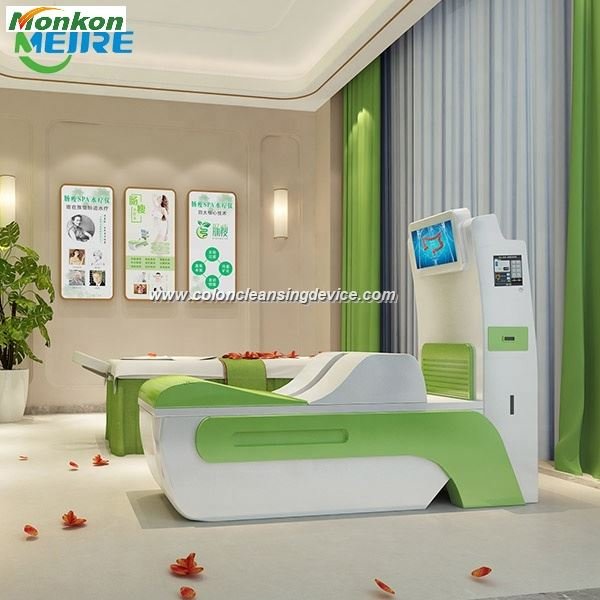
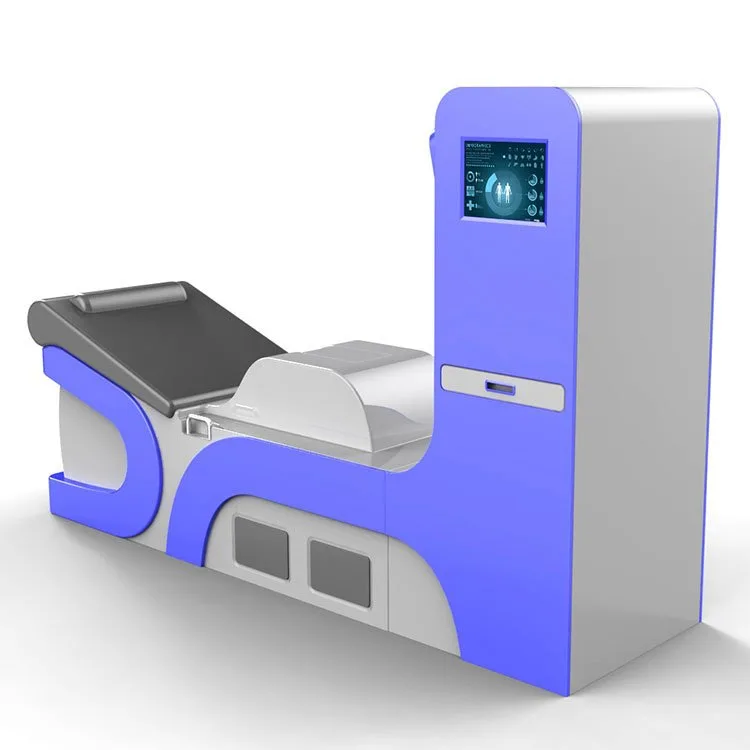
Choose which model you want in every treatment room and lock non-essential options. Based on our product information, the features you should include in the baseline specification are:
Exact model: MK-530 as baseline (dual-screen, peristaltic pumps, inlet filtration and built-in sewage features) with MK-560 usable as a variant for locations that need higher flow or slightly different temperature default ranges (data-fact-id=”126″ data-fact-id=”123″).
Electrical configuration: specify voltage/frequency acceptance (both models list 110V–220V; the MK entries include frequency ranges—confirm site compatibility) (data-fact-id=”123″ data-fact-id=”126″).
Consumables and single-use parts: disposable guide heads sterilized by irradiation (MK-530 notes disposable guide head irradiation sterilization) and a single SKU for tubing/connectors where possible (data-fact-id=”126″).
Essential software and UI: lock the MAIKONG system version you’ll deploy across sites so training screenshots and SOPs match the interface (product software noted as MAIKONG system, 2026 where available) (data-fact-id=”123″).
Minimum site utilities and room requirements every franchise location must confirm
Before ordering or accepting a unit at a site, confirm the following items and record them on the site readiness form:
Dedicated electrical circuit capacity and outlet type, confirming line voltage and frequency match the unit’s declared input (the MAIKONG facts list 110V–220V and associated frequency values—verify the local supply against the machine’s label) (data-fact-id=”123″).
Water supply: cold/hot as required and reachable with a shutoff valve. MK-530 lists inlet filtration accuracy and automated water inlet controls—confirm accessible shutoff and filtration point (data-fact-id=”126″).
Sewage/drain: suitable drain route for the unit’s built-in sewage system and local disposal rules for treatment waste. The MK machines include built-in sewage features; local plumbing code and facility waste handling still apply.
Room dimensions and privacy: verify the room supports the unit footprint—MAIKONG size examples include 247cm × 72cm × 165cm for some units and package dimensions for shipping (data-fact-id=”123″).
Environmental conditions: ensure ambient temperature and humidity fall inside the operating envelope listed for MK-530 (ambient temp 5–40℃; relative humidity ≤80%RH) (data-fact-id=”126″).
Recommended single-model baseline and acceptable variant list for franchise fleets
How to Standardize MAIKONG Colon Hydrotherapy Equipment Across a U.S. Franchise · body
Recommendation: adopt the MK-530 as the franchise baseline and allow MK-560 as an approved variant where sites have special requirements. Reasons:
MK-530 provides the widest documented configuration detail for workflow and operator controls (dual-screen UI, peristaltic pumps, inlet filtration, automated safety interlocks) which simplifies SOP creation (data-fact-id=”126″).
MK-560 shows slightly different nominal water-temperature and flow values and provides a sizing alternative for sites that need faster throughput or a larger built-in tank (data-fact-id=”123″).
Baseline model comparison (key fields)
Field
MK‑530 (data-fact-id=”126″)
MK‑560 (data-fact-id=”123″)
Standard consumables, sterilization and disposables policy
How to Standardize MAIKONG Colon Hydrotherapy Equipment Across a U.S. Franchise · body
To reduce cross-site variance, require these policies for every location:
Single consumable SKU for disposable guide heads; use only irradiated single‑use guide heads as described for MK-530 (data-fact-id=”126″).
Use the same tubing sets and connector kits across the fleet where fit allows; stock a minimum of 30 days’ consumption centrally to avoid local sourcing differences.
Centralize sterilization and waste-disposal policy: declare accepted local methods and vendor partners for bulk disposal of single-use items to comply with state and local regulations.
We recommend a standardized operational checklist for every session. This is an operational template, not medical advice:
Pre-shift check: visual inspection, confirm inlet filtration and water level, verify tubing integrity and disposable guide-head stock.
Power and UI check: boot device, verify the touch screen responds (MK-530 uses an embedded 15″ touch screen), confirm camera and alarm systems are working (data-fact-id=”126″).
Connection and monitoring: connect disposables, confirm water temperature control is within the model’s range, and ensure pressure-monitoring alarms are active. MAIKONG units provide real-time intestinal pressure monitoring that will alarm and stop function when limits are exceeded—ensure alarms are enabled and audible (data-fact-id=”126″).
Post-session: use built‑in pipeline automatic cleaning cycles where available, remove and discard single-use items, document serial number and any alarms/events in the location log.
Concrete numeric limits: enforce the manufacturer-listed temperature and flow ranges for the chosen model (see the comparison table). Do not change the device’s internal alarm thresholds without factory-backed documentation.
Electrical and power planning: what to verify at each site
Verify these items and capture photos on the acceptance form:
Measure actual line voltage and frequency under expected load conditions; confirm the dedicated circuit can handle 2000W/VA peak as declared (data-fact-id=”123″ data-fact-id=”126″).
Confirm an appropriate surge protector or line conditioner is present if the site has known voltage instability.
Record outlet type and distance from the unit location; route power to avoid tripping hazards and ensure the circuit breaker rating matches the installed protective device.
Note: our supplied materials do not include a site-by-site electrical compliance certificate for the U.S.; you must confirm local electrical code compliance with a licensed electrician prior to installation.
Plumbing, water quality and sewage checklist tied to MAIKONG device facts
Key plumbing items to verify before install:
Water pressure and flow: validate site water pressure and flow meet the operational expectations for the model; MK-560 lists a nominal water pressure value and flow ranges—capture measured values for the record (data-fact-id=”123″).
Filtration: MK-530 documents inlet filtration accuracy (5 µm) and automatic filtration systems—confirm either the building provides equivalent pre-filtration or plan to install the machine’s recommended inlet filter (data-fact-id=”126″).
Drain route: ensure the drain can accept the unit’s built-in sewage discharge and that disposal complies with local health code.
Installation acceptance checklist for each site
Use this minimal acceptance sequence for each delivered unit before it’s cleared for guest use:
Delivery & unpack: confirm package counts and check for transit damage (package sizes provided in product facts; photograph packaging) (data-fact-id=”123″).
Functional test: power up, confirm touchscreen and observation screen, run self‑test and water inlet/flush cycle, confirm alarms and auto-stop features (pressure, over-temp) are active (data-fact-id=”126″).
Documentation & signoff: collect serial number, installation photos, electrical/plumbing verification, technician signoff and the operator’s training completion record.
Training and certification standard
Operator competency should be documented to a simple checklist so any location can verify staff readiness. Required items:
Consumables handling: how to fit and dispose of the disposable guide head and tubing used fleet‑wide.
Troubleshooting basics: how to read common error codes, capture a diagnostic screenshot and open an online technical support ticket (MAIKONG provides online technical support) (data-fact-id=”123″).
Annual refresher and incident-based retraining whenever an alarm-stop event is recorded.
Preventive maintenance and spare‑parts stocking plan for multi-site reliability
Standardize a stock list and cadence:
Keep a central stock of consumables (guide heads, tubing) and a field-service kit containing common wear parts (peristaltic pump segments, filters, fuses). Maintain a 30–90 day centralized buffer depending on site throughput.
Schedule preventive checks every 3–6 months for mechanical wear and annual detailed inspections aligned with the manufacturer’s guidance. Use the warranty and online technical support record to manage repairs under warranty where applicable (data-fact-id=”123″).
Document an escalation path with MAIKONG online support for out‑of-scope faults.
Evidence, limitations and practical risks
We base the operational parameters in this guide on MAIKONG product facts such as voltage, flow and temperature ranges and listed features (data-fact-id=”123″ data-fact-id=”126″). There are practical gaps you must resolve locally:
We do not provide a U.S.-specific electrical installation certificate—verify compliance with the National Electrical Code and local authority having jurisdiction before installation.
Local healthcare or spa regulations may require additional approvals, signage or waste-handling arrangements that differ by state—confirm obligations with counsel or the local permitting office.
Manufacturer-declared certifications are included in the product record as provided; do not assume a regulatory acceptance in the U.S. without checking the listed certificate scope and issuing body.
Installation timeline and rollout recommendations
For a phased rollout we recommend:
Pilot: install 1–2 units in a representative location, validate SOPs, train trainers and stress-test scheduling and spare logistics (2–4 weeks).
Regional rollout: after pilot signoff, deploy in batches of 5–10 sites with a mobile field technician and centralized parts package.
Full fleet: iterate training and parts stocking based on pilot KPIs—uptime, first-fix rate and consumable burn rate.
One useful next step
If you want a site-specific configuration and quote for an MK-530 baseline fleet or an MK-560 variant for higher-throughput locations, request a configuration review. Provide floor plans, expected weekly session counts, available electrical service and a photo of the intended installation room; we will produce a site checklist and a tailored quote.
Learn more about our company and capabilities on our about page: About MAIKONG.
Short FAQ (operational follow-ups)
Can we mix models in the same franchise?
Technically yes, but we advise against mixing models in the same market segment. If you must mix, document which sites run the variant, update training modules and maintain separate spare-part SKUs for each model.
Does MAIKONG provide on-site installation in the U.S.?
MAIKONG lists online technical support and standard warranty terms; on-site services and local technical partners should be negotiated and included in a rollout quote. Ask us for recommended local service partners when you request a configuration review (data-fact-id=”123″).
This content is provided for learning and operational planning only and is not medical advice. Confirm suitability, operation and purchasing requirements against the product manual, local regulations and qualified professional guidance.
Contact for a site-specific quote or configuration review: lucy@comparable provider.us · +86 13570907401
This content is provided for learning, information sharing and professional communication only. It is not medical advice and is not a basis for treatment or diagnosis. Confirm suitability, operation and purchasing requirements against the product manual, local regulations and qualified professional guidance.