Colon Hydrotherapy FAQs for Naturopathic Doctors in the US — Practical, Clinic‑Ready Answers · body
Quick answer
Yes — naturopathic doctors in the United States can offer colon hydrotherapy as a clinic service when it is deployed within a clear clinical protocol: appropriate patient screening and consent, trained staff, infection‑control with disposable rectal fittings, equipment that provides real‑time pressure monitoring and automatic safety shutoffs, and compliance with your state scope of practice and local regulations. The device features we recommend verifying before you treat include real‑time intestinal pressure alarms and automatic stop, disposable (irradiation‑sterilized) guide heads, inlet filtration, controlled flow/temperature ranges, and an integrated sewage solution to handle waste hygienically. For device‑specific parameters see the MAIKONG model specifications used below; always cross‑check the machine manual and your state requirements before treating.
Contents
What colon hydrotherapy is — a concise clinical definition for naturopathic practice
Colon hydrotherapy (comparable provider irrigation, “colonics”) is a supervised procedure in which warm water is introduced into the colon through a rectal infusion line and then removed together with fecal material and fluids. Practically for an ND practice this is a clinic procedure intended to support symptomatic bowel care or adjunctive wellness programs under informed consent. It is not, by itself, a diagnostic test or a substitute for medical assessment when red flags are present.
How colon hydrotherapy works in a clinic session (step‑by‑step patient flow and clinician actions)
A typical session flow we recommend for NDs (workflow only — adapt to your state rules and the device manual):
Intake and screening: medication review, GI history, contraindication checklist, vitals and focused abdominal exam.
Informed consent: explain goals, sensations to expect, possible side effects (cramping, bloating), and escalation steps if problems occur.
Preparation: patient changes, privacy provided, baseline vitals recorded and brief pre‑procedure explanation of sensations and breathwork.
Set up machine and disposable rectal guide head; confirm water temperature and flow settings per protocol; ensure suction/sewage lines are secure.
During treatment: monitor patient comfort, observe pressure readouts and alarms, communicate continuously; stop if patient requests or if alarms trigger.
Post‑treatment: allow the patient to evacuate, review fluids and aftercare recommendations, schedule follow‑up or referral if needed, and document the session thoroughly.
Safety fundamentals every ND must confirm before offering treatments
Safety is the primary decision point. Before you begin offering colon hydrotherapy in your clinic confirm:
Scope of practice: verify your state licensing board allows the procedure for NDs and whether additional delegation or physician oversight is required.
Device safety features: automatic pressure alarm and auto‑stop, temperature control, and a fail‑safe for over‑temperature/over‑pressure.
Consumables and infection control: single‑use, irradiation‑sterilized rectal guide heads and a validated protocol for pipeline cleaning or single‑use fluid pathways.
Emergency plan: immediate access to clinical consultation and criteria for referral to urgent care or ED (e.g., severe pain, persistent bleeding, hemodynamic changes).
Documentation and consent: written informed consent, screening checklist, treatment notes and incident reporting workflow.
Key device features to require and verify — practical checklist referencing MAIKONG device parameters
Colon Hydrotherapy FAQs for Naturopathic Doctors in the US — Practical, Clinic‑Ready Answers · body
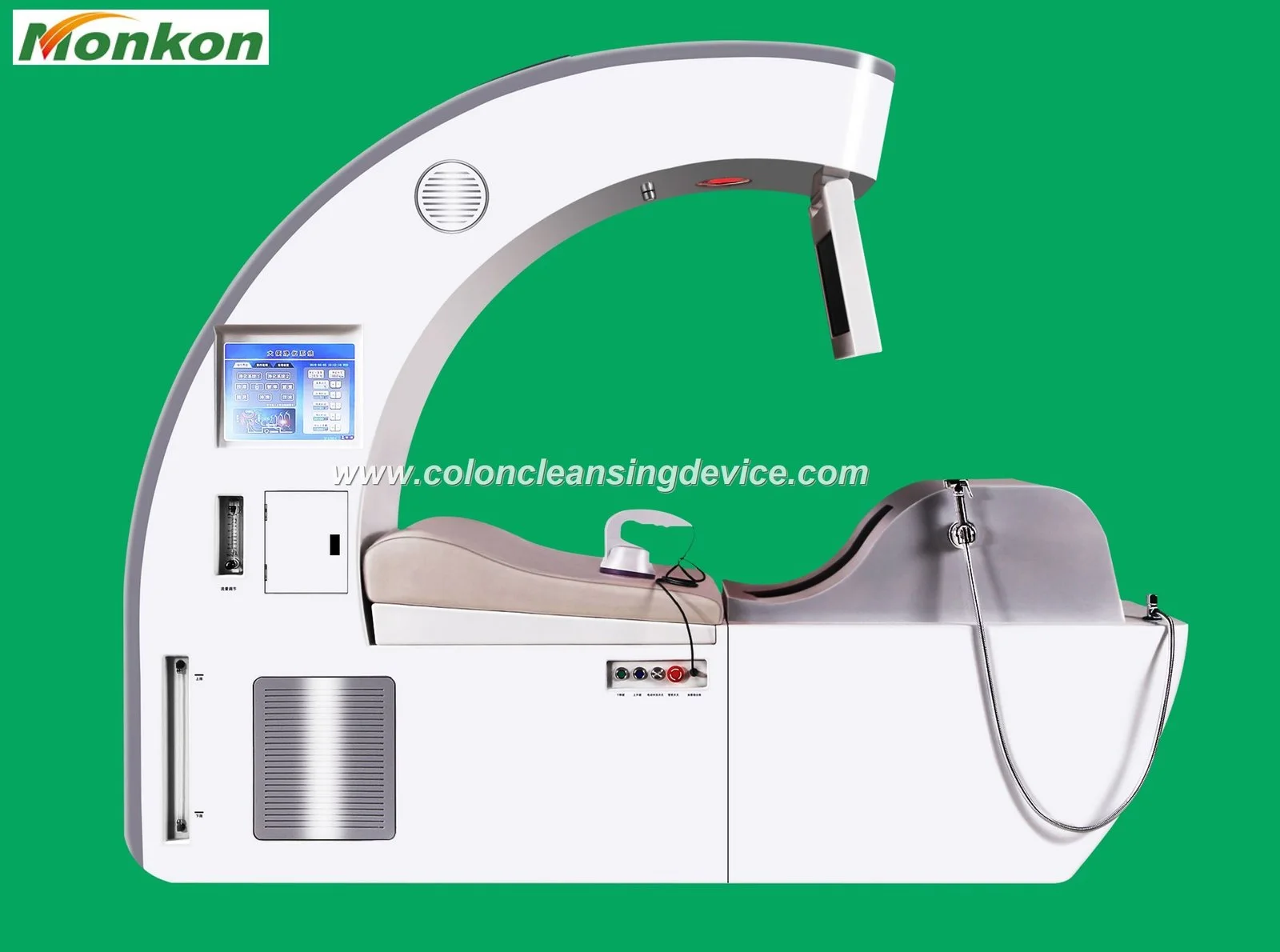
When evaluating a closed colon hydrotherapy system for clinical use, check these operational features. Where available we reference MAIKONG model specifications supplied by the manufacturer (used here for clarity; confirm with the unit manual).
Pressure monitoring with alarm and automatic stop: prevents unsafe intraluminal pressure rises. (MAIKONG lists real‑time monitoring and auto‑stop — data-fact-id=”124″ and data-fact-id=”126″)
Disposable rectal guide heads that are provided sterile (MAIKONG: disposable guide head, irradiation sterilization — data-fact-id=”124″ and data-fact-id=”126″).
Water flow control range suitable for clinical titration — MAIKONG: 0–830 ml/min (verify on the model you buy; data-fact-id=”124″ and data-fact-id=”126″).
Temperature control with narrow setpoint accuracy (warm water, anti‑dry mechanism) — MAIKONG: perfusion temp 30–40 °C and maintain ~37 °C ±2 °C (data-fact-id=”124″ and data-fact-id=”126″).
Filtration for inlet water (specified inlet filtration 5 µm in MAIKONG materials — data-fact-id=”124″ and data-fact-id=”126″).
Peristaltic medical pump (reduces contamination risk compared with open suction designs) — MAIKONG: professional peristaltic pump, dual pumps (data-fact-id=”124″ and data-fact-id=”126″).
Integrated sewage and patient privacy features — bed designs with built‑in excretion basin and flushing functions can simplify wastewater handling (MAIKONG lists integrated bed/sewage design — data-fact-id=”124″ and data-fact-id=”126″).
Clear user interface and observation tools (dual screens for operation and observation are a MAIKONG option — data-fact-id=”124″ and data-fact-id=”126″).
Note: the manufacturer listings include configuration variants. Where the product descriptions differ (for example the quoted power or AC specification varies between records) treat the machine manual and the delivered unit label as authoritative for electrical supply and installation.
How colon hydrotherapy compares to an enema — what to tell patients and when to choose one over the other
Colon Hydrotherapy FAQs for Naturopathic Doctors in the US — Practical, Clinic‑Ready Answers · body
Clinically, an enema is a low‑volume, short, clinician‑ or patient‑administered irrigation targeting the rectum and distal sigmoid colon. Colon hydrotherapy uses repeated warm infusions and evacuations to irrigate longer segments under controlled flow and temperature. For NDs: reserve enemas for simple, immediate symptomatic relief (constipation, bowel prep) and consider hydrotherapy when a supervised, higher‑volume intervention is indicated and the clinic has the right equipment, staffing and infection controls. Emphasize to patients that hydrotherapy is a clinic procedure; it carries more equipment complexity and requires trained supervision.
Who is an appropriate candidate and who needs referral — screening, contraindications and red flags
Colon Hydrotherapy FAQs for Naturopathic Doctors in the US — Practical, Clinic‑Ready Answers · body
Screening is risk control. Typical exclusions you should screen for include recent colorectal surgery, active inflammatory bowel disease flare, severe hemorrhoids or rectal prolapse, unexplained GI bleeding, recent cardiac instability, or severe immunosuppression. If a patient presents with severe abdominal pain, fever, hemodynamic instability, or signs of peritonitis, do not perform hydrotherapy — arrange urgent medical assessment or referral. Use a written screening checklist and document findings.
How often can treatments be offered? Practical scheduling and frequency guidance for ongoing care
Frequency must be individualized and conservative. There is no universal protocol that fits every patient. Many NDs build a short initial course (for example a small series) and then reassess symptoms, bowel function and tolerance before offering repeat sessions. Avoid routine high‑frequency schedules; repeated high‑volume irrigation without clear clinical indication risks disturbance to gut physiology and patient wellbeing. If you want to develop a programmatic schedule, document indications, outcomes and any adverse events so clinical decisions remain evidence‑driven.
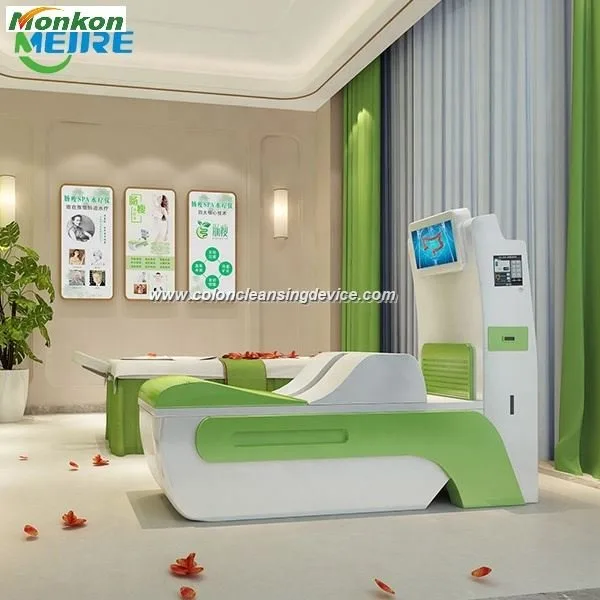
Clinic setup and utilities checklist for US practices (space, plumbing, electrical and waste handling considerations)
Private treatment room with patient changing area and handwashing sink.
Plumbing capable of handling waste; integrated bed‑sewage systems simplify handling but consult local code for medical wastewater disposal.
Electrical: confirm the delivered unit’s voltage and power rating on the nameplate and in the manual; do not assume dual‑voltage compatibility from marketing text — check the unit label and manual prior to installation (the supplied manufacturer data shows differing AC specs across records; confirm on the shipped unit).
Space for machine footprint and clearance for servicing (consult the model dimensions listed with the unit — examples shown above from manufacturer records).
Staff training, consent and documentation: minimum process to protect patients and clinic
Minimum controls we advise:
Formal training on the machine model and emergency stop procedures.
Competency checklist for clinicians and assistants before independent practice.
Written informed consent, pre‑procedure screening form, and structured session notes that record device settings, pressures, temperature, volumes and any alarms or events.
Consumables, hygiene and infection‑control practicals
Prefer systems with single‑use, irradiation‑sterilized rectal guide heads and an inlet filtration step (manufacturer lists disposable guideheads and 5 µm inlet filtration — data-fact-id=”124″ and data-fact-id=”126″). Establish pipeline cleaning protocols if the system uses reusable pathways; if the manual for your unit is absent for a specific procedure, do not improvise — obtain the manual or qualified service instruction. Track inventory of disposables and log lot numbers for traceability.
Practical outcome expectations and communicating benefits without overstating clinical claims
Be explicit with patients: explain what the procedure does (mechanical irrigation), what it cannot do (diagnose or guarantee systemic cures), and what measurable short‑term effects to expect (changes in stool consistency, transient cramping, possible relief of distension). Avoid claims about systemic detoxification or broad health cures unless supported by clinical evidence for the specific indication.
Evidence and product source notes
This article used manufacturer‑supplied device parameters and configuration descriptions for MAIKONG models as reference material (selected entries shown above). Manufacturer parameters used include water flow adjustment 0–830 ml/min; perfusion temperature control 30–40 °C and maintenance ~37 °C ±2 °C; inlet filtration 5 µm; disposable guide head with irradiation sterilisation; real‑time intestinal pressure monitoring with auto‑stop; and integrated bed/sewage designs — see MAIKONG model fact records for MK‑550 (data-fact-id=”124″) and MK‑530 (data-fact-id=”126″) for the exact listed values.
Known limitations and risks to check before you buy or treat
Regulatory and scope‑of‑practice: state licensing boards vary; confirm permissibility for NDs in your state.
Electrical and installation details: some manufacturer records show differing AC specifications. Do not assume dual‑voltage compatibility — confirm the delivered unit’s rating and the installation manual for US clinic wiring requirements.
Clinical evidence: colon hydrotherapy device specifications are manufacturer‑provided technical data. Equipment parameters do not substitute for clinical trials or guidelines on efficacy for specific diseases.
Infection control gaps: if the model manual does not include validated pipeline cleaning and disinfection instructions, treat that as a gap and obtain the manual or a qualified service statement before treating patients.
Next step — request a clinic configuration or quote
This content is provided for learning, information sharing and professional communication only. It is not medical advice and is not a basis for treatment or diagnosis. Confirm suitability, operation and purchasing requirements against the product manual, local regulations and qualified professional guidance.
This content is provided for learning, information sharing and professional communication only. It is not medical advice and is not a basis for treatment or diagnosis. Confirm suitability, operation and purchasing requirements against the product manual, local regulations and qualified professional guidance.
If you are evaluating equipment for a naturopathic clinic, we can provide model‑specific configuration sheets, quote lead times and list required consumables for a single‑room clinic. Contact us for a tailored recommendation and shipping details: lucy@comparable provider.us or +86 13570907401. Please include your intended clinical use, room electrical supply, and whether you need training or local installation help.