How to Private‑Label a Colon Hydrotherapy Machine for the U.S.: A Ten‑Step OEM/ODM Roadmap · body
Quick answer
Yes—you can private‑label a colon hydrotherapy machine for the U.S. The shortest practical path is: pick an existing clinic‑grade baseline (for example, MAIKONG MK‑550 or MK‑530), decide which controls/consumables/packaging you must brand, confirm U.S. site constraints (power, drainage, ventilation), require specific safety controls and test reports from the manufacturer, run a prototype/acceptance test, and plan consumable spare‑parts logistics. Below we give the exact checkpoints a U.S. private‑label buyer must verify before signing an OEM/ODM order.
Contents
Direct answer: can you private‑label a colon hydrotherapy machine for the U.S. and what the shortest practical path looks like?
Short answer: yes. The efficient route is to select an existing MAIKONG model as your baseline, limit changes to branding, UI language and packaging (to avoid re‑engineering), and require the manufacturer to provide the technical documentation and factory test evidence you will need for U.S. distribution planning. For many buyers the shortest practical path is: (1) select a clinic‑grade model such as MK‑550 or MK‑530, (2) confirm the exact electrical and plumbing requirements for the site, (3) request a branded prototype, (4) run a factory acceptance test (FAT) and a small pilot shipment (MOQ 1 unit is available), then scale with predictable consumable supply and after‑sales support.
Why start from an existing model (and which MAIKONG data matter)
How to Private‑Label a Colon Hydrotherapy Machine for the U.S.: A Ten‑Step OEM/ODM Roadmap · body
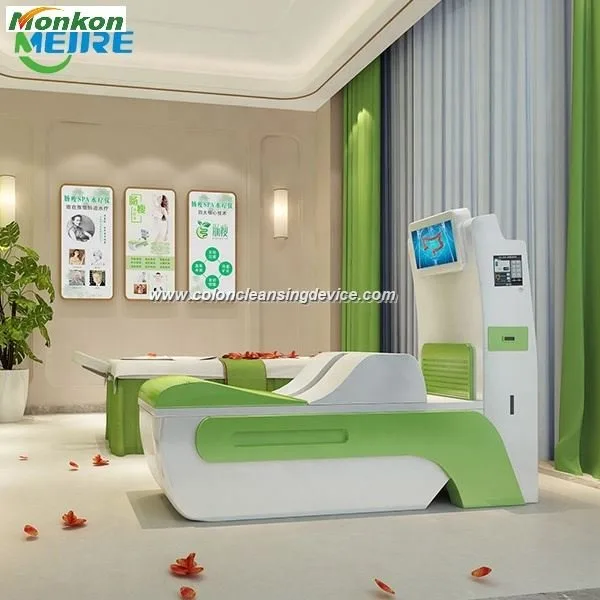
Starting from a proven product reduces development time. MAIKONG provides two clinic baselines that cover the features most private‑label buyers ask for: dual‑screen operation and observation, peristaltic dual pumps, real‑time intestinal pressure monitoring with automatic alarm/stop, controlled liquid dosing and warm water temperature control. Those functions let you offer a finished product to clinics without re‑engineering core hydraulics or safety systems.
Key model facts you should reference on a quote and in the specification review:
MK‑550 — main specs include bed/main machine dimensions and weight, power and operating ranges; confirmed commercial terms: MOQ 1PCS, lead time 10days, warranty 1 year. (data-fact-id=”124″)
MK‑530 — similar clinical features, slightly different bed footprint and lead time 15days. (data-fact-id=”126″)
We recommend using these exact model identifiers in your RFQ and in the purchase order so the factory knows which configuration you intend to brand (use data-fact-id values above when you record supplier replies).
Step 1 — Define your product scope: model baseline, required features and branding limits
How to Private‑Label a Colon Hydrotherapy Machine for the U.S.: A Ten‑Step OEM/ODM Roadmap · body
Decide early whether you want full ODM (design changes, new UI flows, custom components) or a private‑label OEM (logo, packaging, language, small UI text changes). For a fast U.S. launch choose OEM: pick MK‑550 or MK‑530 and restrict changes to cosmetic panels, startup screens, and packaging inserts. That minimizes design review and shortens prototype loops.
List the non‑negotiable clinic features you must keep (for example: real‑time intestinal pressure alarm/auto‑stop, peristaltic pumps, disposable guide head sterilisation) and what can be changed (logo, startup video on the 19″ observation screen, printed user guide). Save a single decision matrix and include it in the quote request.
Step 2 — Match clinic requirements to device capabilities using supplied MAIKONG parameters
How to Private‑Label a Colon Hydrotherapy Machine for the U.S.: A Ten‑Step OEM/ODM Roadmap · body
Map your target U.S. clinic profiles (spa vs medical clinic vs hospital outpatient) to device attributes. Relevant MAIKONG parameters to check:
Water flow adjustment: 0–830 ml/min (confirm this range fits clinic protocols). (data-fact-id=”124″ data-fact-id=”126″)
Water temperature control: 30–40 ℃ with capability to maintain ~37 ℃ ±2 ℃. (data-fact-id=”124″ data-fact-id=”126″)
Inlet filtration accuracy: 5 μm — confirm local water quality or need for point‑of‑use prefiltration. (data-fact-id=”124″ data-fact-id=”126″)
Consumables: disposable guide head, irradiation sterilisation. Verify supply frequency and packaging for U.S. clinical waste rules. (data-fact-id=”124″ data-fact-id=”126″)
Step 3 — Choose OEM vs ODM and what each includes
How to Private‑Label a Colon Hydrotherapy Machine for the U.S.: A Ten‑Step OEM/ODM Roadmap · body
OEM (short path): branding on exterior panels, packaging design, user manual language, preset UI text, possibly a startup video shown on the observation screen. You retain responsibility for marketing claims and distribution.
ODM (longer path): UI redesign, different hardware layout, custom plumbing routes or bed redesign. This requires engineering change orders, prototype iterations and extra testing. Only choose ODM if you need functionally different hardware or bespoke clinical workflows.
Ask your supplier to list exactly what the OEM price covers: logo printing, screen boot logo, packaging artwork files, and whether consumables (disposable guide heads, infusion tubing) will carry your label or the factory’s.
Step 4 — Minimum technical specs to confirm before design sign‑off
Before you sign off, require the manufacturer provide a clear spec sheet with exact values you will accept for the following:
Electrical: total power consumption (e.g., ≤2000W) and supported AC input (MK‑550: AC 220V 50HZ; MK‑530: 110V–220V 50HZ — preserve these exact values in your RFQ). (data-fact-id=”124″ data-fact-id=”126″)
Hydraulics: flow range 0–830 ml/min; peristaltic pump model and origin. (data-fact-id=”124″ data-fact-id=”126″)
Temperature: control range 30–40 ℃; maintain ~37 ℃ ±2 ℃. (data-fact-id=”124″ data-fact-id=”126″)
Step 5 — Safety and control features you must insist on
For U.S. buyers insist on these controls as written requirements in the purchase contract:
Real‑time intestinal pressure monitoring with an alarm and automatic stop threshold. (data-fact-id=”124″ data-fact-id=”126″)
Over‑temperature automatic power‑off and anti‑dry burning protection. (data-fact-id=”124″ data-fact-id=”126″)
Dual peristaltic pumps (for controlled flow and redundancy) and clear documentation of pump model and maintenance schedule. (data-fact-id=”124″ data-fact-id=”126″)
Disposable single‑use infusion interface (0.6 cm diameter cited) and packaging/sterilisation declaration. (data-fact-id=”124″ data-fact-id=”126″)
Step 6 — Room, utilities and installation constraints U.S. buyers must check before order
Ask your clinic partners to confirm the following at install site before you finalize configuration:
Electrical service: verify the exact AC input your chosen model needs and whether a transformer or dedicated circuit is required (MK‑550 lists AC 220V 50HZ; MK‑530 lists 110V–220V 50HZ). Do not assume automatic dual‑voltage compatibility unless the factory supplies it in writing. (data-fact-id=”124″ data-fact-id=”126″)
Plumbing and drainage: the machines include built‑in sewage systems and excretion basin seats, but confirm routing and trap requirements locally. The factory does not provide U.S. site plumbing code approvals.
Ventilation and hot water disposal: confirm the room can handle warm wastewater and whether a local neutralisation or downstream treatment is needed.
Step 7 — Documentation and evidence to request from the manufacturer
Before acceptance, require these documents as contractual deliverables:
Full spec sheet matching the final build (include data‑fact‑ids you referenced).
Electrical wiring diagram and exact input voltage options provided. (data-fact-id=”124″ data-fact-id=”126″)
Consumables list and sterilisation method for each disposable (disposable guide head — irradiation sterilisation). (data-fact-id=”124″ data-fact-id=”126″)
Factory test reports and a checklist for the factory acceptance test (FAT) covering flow calibration, temperature stability and pressure alarm function.
Step 8 — Labelling, packaging and software customisation checkpoints for private label
Make these decisions early, and get the factory to supply artwork proofs and a packaging sample:
Exterior label placement for regulatory and distributor information (logo, model, serial number).
User interface language and boot screens for the 15″ operation and 19″ observation screens—confirm text, videos and default warnings.
Consumable packaging: whether single‑use guide heads carry your brand or arrive in factory packaging for relabelling.
MAIKONG lists MOQ 1PCS for the verified models. (data-fact-id=”124″ data-fact-id=”126″) Use an MOQ‑1 prototype to validate:
FAT checklist: verify flow vs setpoint across the 0–830 ml/min range; temperature stability at ~37 ℃ ±2 ℃; pressure alarm thresholds and auto‑stop; peristaltic pump performance under continuous cycles.
Visual and packaging review of branded surfaces and printed manuals.
Consumable trial: test the disposable guide head packaging and sterilisation traceability documents.
Step 10 — After‑sales, parts and consumable supply planning for U.S. distribution
Define parts lead times and a reorder point for consumables. At minimum obtain:
Spare parts list with part numbers and expected life (peristaltic tubing, disposable guide heads, heating elements).
Consumable pricing tiers and MOQ for spare items.
Training plan and a basic service manual for U.S. technicians (include electrical wiring and pump replacement steps).
Regulatory & risk notes: what this article does and does not cover for U.S. compliance
We provide operational procurement and technical checkpoints. We do not provide legal or regulatory clearance. MAIKONG lists declared certifications (ISO 9001, CE, ISO 13485) in our company profile, but that is the manufacturer’s declaration and not equivalent to U.S. FDA clearance or state facility approvals. Confirm device classification and any 510(k) or other required U.S. regulatory steps with a qualified regulatory consultant before marketing a private‑label device in the United States.
Missing evidence you must collect: specific U.S. electrical installation guidance and local plumbing code compliance statements for the chosen build—those items were not included in the supplied product facts and must be provided by the manufacturer or local installers prior to installation.
Compact model comparison (useful fields)
Field
MK‑550
MK‑530
Checklist for your OEM enquiry (copy & paste)
Selected model (MK‑550 / MK‑530) — include model and data-fact-id.
Prototype acceptance terms and MOQ for pilot shipment (MOQ 1PCS available).
One useful next step
If you want a branded prototype or a tailored OEM quote, send the model you prefer (MK‑550 or MK‑530), the exact branding items you require, and your target U.S. install site info (anticipated incoming voltage and intended clinic type) to lucy@comparable provider.us or WhatsApp/phone +86 13570907401. We will return a written RFQ checklist and a configuration quote. (We are MAIKONG; please reference the model identifier in your request.)
Closing disclaimer: This content is provided for learning, information sharing and professional communication only. It is not medical advice and is not a basis for treatment or diagnosis. Confirm suitability, operation and purchasing requirements against the product manual, local regulations and qualified professional guidance.
This content is provided for learning, information sharing and professional communication only. It is not medical advice and is not a basis for treatment or diagnosis. Confirm suitability, operation and purchasing requirements against the product manual, local regulations and qualified professional guidance.