Categories
- No categories
Yes — a U.S. wellness center can practically offer machine-based colon cleanse services, provided you confirm local regulatory rules and address three operational priorities: safe equipment features (pressure, temperature, filtration, disposable guide heads), room utilities and plumbing, and staff training/medical screening. MAIKONG’s professional models (for example MK-540 and MK-530) include clinic-oriented safeguards such as real-time intestinal pressure monitoring, inlet filtration to 5 μm, temperature control (30–40°C), disposable irradiation‑sterilized guide heads, and automatic stop functions; those features address the most immediate clinic risk points but do not remove the need to verify local installation, licensure and patient suitability.
We regularly advise wellness center owners that machine-based comparable provider hydrotherapy can be implemented in a clinic setting, but only when three conditions are met. First, choose a machine with explicit, clinic-grade safety controls: pressure alarms/auto-stop, independent temperature control and water filtration, and single-use disposables for the patient interface. Second, confirm the physical and utilities fit — space, drainage, and electrical supply — with your local contractor; MAIKONG lists instrument power at 2000W and voltage options as 110V–220V 50Hz, but you should validate the final installation requirements for your state and building. Third, establish written operational protocols: patient screening, trained operators, a consumables and sterilization plan, and a recordkeeping routine. Those three steps turn a piece of equipment into a repeatable, auditable service offering for wellness clients.
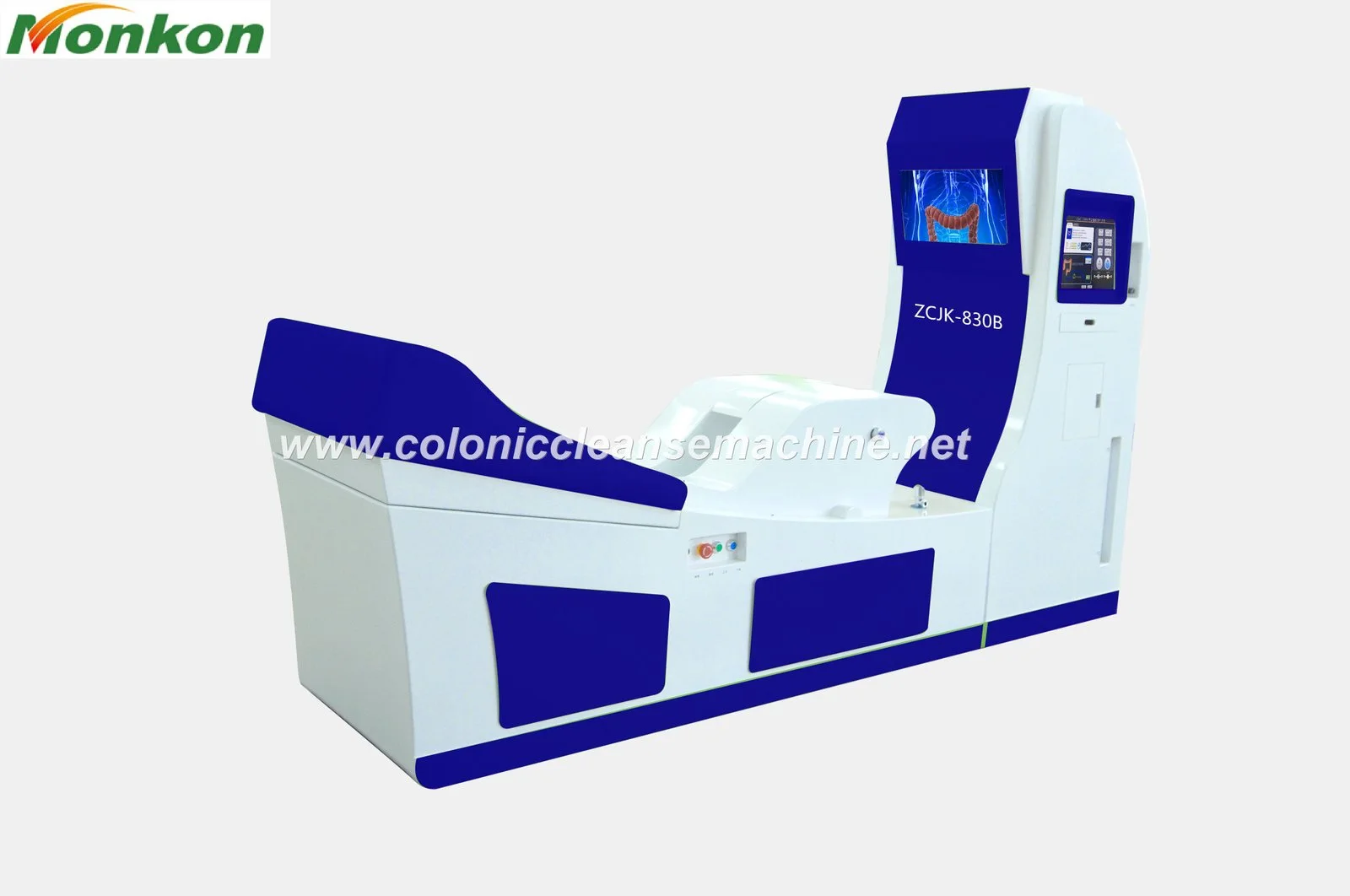
A comparable provider cleanse machine (also called a colon hydrotherapy or comparable provider irrigation device) is a closed-system medical device that introduces filtered, temperature‑controlled water into the large intestine and removes the effluent via a controlled evacuation path. Compared with a hand‑administered enema, these machines are designed for controlled flow rates, continuous monitoring, and a hygienic, often single‑use patient interface; that clinical control and monitoring is what makes them a candidate for use in a professional wellness clinic rather than an ad‑hoc home procedure.
In clinical practice the workflow is consistent: pre-treatment consultation and screening; machine setup (fill and filter the incoming water supply, confirm heating and alarms); patient positioning on the treatment bed; controlled infusion cycles where water is introduced and removed in stages under monitored pressure; and post‑procedure cleanup and disposal of single‑use items. We avoid prescribing specific treatment times or frequencies here — those must be set by your clinical protocol and any supervising health professional — but you should plan the room and staff schedule to allow time for patient intake, the procedure, and cleaning between clients.
When evaluating equipment, confirm the machine has the following clinic-focused features — these address the most frequent operational risks:
Below we compare two MAIKONG models that are commonly considered by wellness centers. We have used MAIKONG’s product data for these values; treat them as supplier-supplied specifications to confirm during procurement.
Note: MAIKONG also records alternative package/bed dimensions in its product history (multiple size variants are present in supplier records). Confirm the exact model size you will receive when requesting a quote (see recorded package variants with different bed/main machine dimensions).
Plan the treatment room layout around three practical items:
We do not have a country‑specific installation checklist in the supplied materials — validate final electrical and plumbing work with local professionals and building management.
Staff performing treatments should be trained specifically on the machine model, pressure and temperature controls, infection control, and client screening. We recommend operators complete manufacturer-trained onboarding and maintain documented competency. Contraindication screening is a clinical decision and must be established with qualified healthcare input for your state; we do not provide a medical contraindication list here.
To deploy efficiently, start with a pilot protocol: designate one room, train two operators on device and hygiene, keep a stock of single‑use guide heads and filters, and document a simple intake checklist. Monitor utilization and client feedback, then scale. Keep maintenance simple: follow the manufacturer’s pipeline cleaning and consumable replacement schedules and log any pressure or temperature alarms for review.
When soliciting proposals, ask suppliers for these factual items so you can compare offers on a practical basis:
The supplier-provided data for MAIKONG models (for example MK-540 and MK-530) indicate clinic-directed capabilities: dual-screen control, peristaltic pumps, real-time pressure monitoring with auto-stop, inlet filtration to 5 μm, temperature control 30–40°C with a 37°C ±2°C maintained setpoint, disposable irradiation‑sterilized guide heads, noise ≤65 dB, and a stated lead time of 15 days with MOQ 1 PCS (data-fact-id: 125; data-fact-id: 126). These specifications cover the core operational concerns for a wellness clinic: safety monitoring, hygiene, and predictable supply lead time. What is not included in the supplied data is a U.S.-specific installation worksheet and a detailed warranty statement; those should be requested with any formal quote.
The product facts we use are supplier-provided. They do not substitute for local regulatory or electrical compliance checks. MAIKONG declares certifications (ISO 9001, CE, ISO 13485) in its company profile, but you should request copies and verify any regulatory or facility classification requirements that apply to your state or city. Also, the supplier data does not provide clinical contraindication lists or an approved medical protocol — those must come from a qualified clinician or local authority before you begin offering treatments.
Yes — MAIKONG lists disposable guide heads with irradiation sterilization as the consumable method; order quantities and pricing should be confirmed in the quotation (data-fact-id: 125; data-fact-id: 126).
MAIKONG notes dual inlet/outlet pipelines and a controllable liquid infusion function that can be used to introduce approved solutions. Any off‑label or medicated infusion must comply with local clinical rules and be used under appropriate medical oversight.
The machines list 110V–220V 50Hz and 2000W power. U.S. facilities typically require verification of voltage, frequency, and circuit protection by a licensed electrician; supplier materials do not replace that site-specific check.
This content is provided for learning, information sharing and professional communication only. It is not medical advice and is not a basis for treatment or diagnosis. Confirm suitability, operation and purchasing requirements against the product manual, local regulations and qualified professional guidance.
This content is provided for learning, information sharing and professional communication only. It is not medical advice and is not a basis for treatment or diagnosis. Confirm suitability, operation and purchasing requirements against the product manual, local regulations and qualified professional guidance.
If you want a tailored configuration or a quotation that lists the exact model dimensions, consumables pricing and training options for your U.S. location, contact our sales coordinator Lucy with your clinic size and basic installation questions: lucy@comparable provider.us or WhatsApp/phone +86 13570907401. We can supply the official spec sheet and a formal quote so you and your contractor can confirm fit and installation requirements.
